HVAC Sizing and Manual J in Woodland Hills
Last updated 2026-06-13.
The honest answer: Getting the tonnage right on a Trane for Woodland Hills, CA (91364, 91367, 91371) comes down to a Manual J load calculation rather than a guess copied off the old condenser nameplate or a square-foot rule of thumb, so call (213) 513-5436 or book online to schedule one. In LA's hottest neighborhood, too much capacity short-cycles the unit, while too little leaves you sweating through a 100 F afternoon.
Facts and figures
- The trade's standard load-calculation method is Manual J, which matches a system to the home's real heat gain.
- Go too big and you get short-cycling - cold-then-warm swings, weak dehumidification, and parts that wear faster.
- Go too small and the unit runs flat-out yet never reaches setpoint through a hot afternoon.
- Title-24 Climate Zone 9 covers Woodland Hills, where July highs near 94 to 98 F push the design temperature high.
- Cloning the old nameplate just hands down earlier sizing errors and overlooks any changes to the envelope.
- Ducts (Manual D) carry as much weight as tonnage, since the leaky 1960s variety starves whatever you install.
- Independent and not Trane-authorized; service area 91364, 91367, 91371.
What is Manual J and why does it matter here?
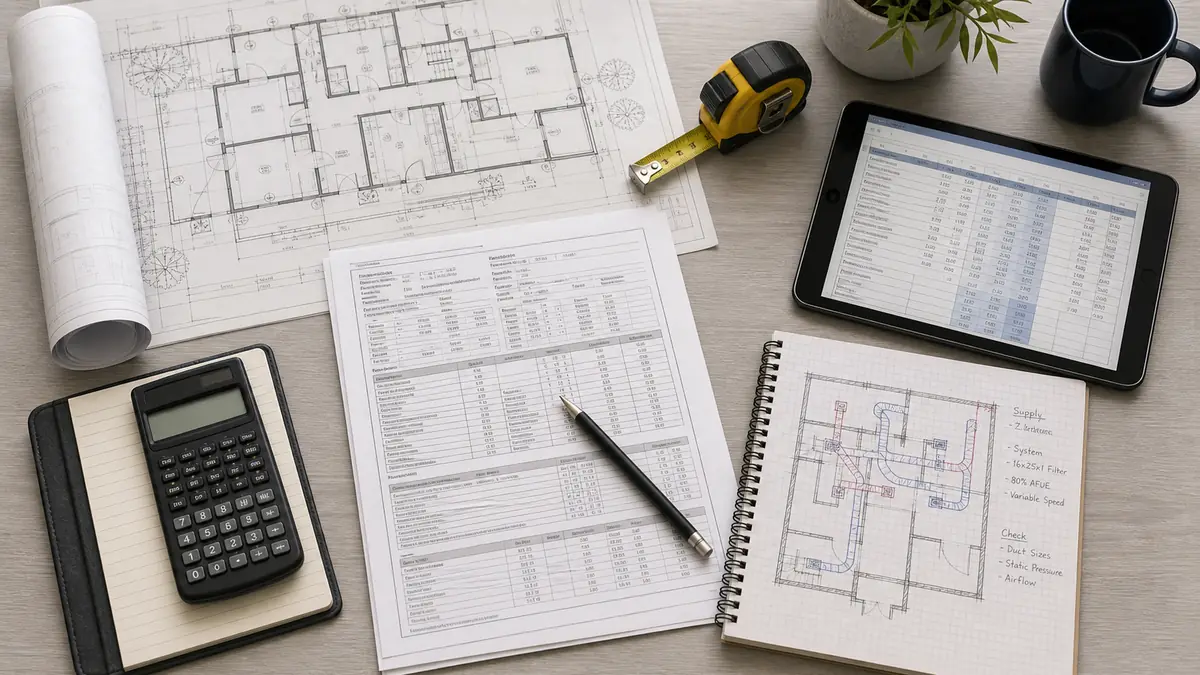
For residential work, Manual J is the recognized way to calculate load. It works out how much heat a particular house picks up on a design-hot day by weighing square footage, ceiling height, insulation, the area and facing of the glass, how much air leaks in, and the local design temperature. What comes out is a BTU figure the system has to remove, and that converts into tons of cooling. It does away with the lazy shortcut of so many square feet per ton, the rule that keeps salting the valley with oversized, short-cycling systems.
Here, the design temperature is what swings the answer. Woodland Hills holds the title of hottest neighborhood in the City of Los Angeles and sits in cooling-dominant Climate Zone 9, so the calc plugs in a higher design temperature than a coastal address would. That is not a license to upsize for its own sake - it is a reason to size tightly to a load that genuinely is big, so the unit runs long and even across our months-long cooling season rather than blasting cold and cutting out.
Why is oversizing the most common mistake?
The instinct is understandable: it is a hot neighborhood, so buy a big AC. Physics does not cooperate. An oversized condenser pulls the air temperature down so fast that it trips the thermostat and switches off before it has run long enough to handle two jobs that matter - drawing humidity out of the air and carrying conditioned air to the far corners of the house. The upshot is short-cycling. Here is how those symptoms show up.
| Symptom | Likely sizing issue | What it points to |
|---|---|---|
| Rapid on-off cycling, cold then warm | Oversized system satisfying too fast | Re-size; right-size on next changeout |
| Rooms feel clammy even when cool | Oversized unit not running long enough to dehumidify | Manual J + two-stage or variable-speed |
| Runs nonstop, never reaches setpoint | Undersized for the Zone 9 load | Manual J; likely upsize or seal ducts |
| Far rooms always hotter than the thermostat | Duct design / airflow, not just tonnage | Manual D duct check |
On top of the comfort problems, short-cycling grinds down the compressor and capacitor sooner, since startup is the single hardest moment a unit faces. Drop that into a heat pocket that already leans hard on those parts, and oversizing ends up quietly cutting years off an expensive system.
What does a Manual J actually measure?
A load calc is only as trustworthy as what you feed it, which is why a real one walks the house instead of typing in a square-footage figure. Below are the inputs that swing the result most in Woodland Hills.
| Factor | Why it matters | Local note |
|---|---|---|
| West and south window area | Afternoon solar gain in a heat pocket | Adds cooling load on hillside rooms |
| Insulation and attic condition | Heat soak through the roof | 1960s ranch attics often under-insulated |
| Air infiltration / leakage | Hot outside air sneaking in | Older homes leak more, raising load |
| Square footage and ceiling height | Volume of air to condition | Open rebuilds carry larger loads |
| Local design temperature | Zone 9 runs hot; ~94-98 F July highs | Higher design temp than coastal LA |
West- and south-facing glass is the big swing in this terrain. A hillside rebuild with a wall of west-facing windows takes a brutal solar load at exactly the hottest hour, which is why those homes often need both more capacity and the even output of a variable-speed system rather than just a bigger single-speed unit.
What size Trane do typical Woodland Hills homes need?
The only honest answer is that the calc decides. But to set expectations, here are rough starting points for common local home types. Treat these as ballparks the load calc confirms or corrects, never as a substitute for it.
| Home type | Typical size | Ballpark tonnage |
|---|---|---|
| Small ranch, tight envelope | Roughly 1,200 - 1,600 sq ft | 2 to 2.5 tons (calc confirms) |
| Typical 1960s ranch, leaky ducts | Roughly 1,600 - 2,200 sq ft | 2.5 to 3.5 tons (calc confirms) |
| Large hillside rebuild, open plan | Roughly 2,800 - 4,000+ sq ft | 4 to 5+ tons, often zoned (calc confirms) |
For a tidy ranch, a right-sized XL18i two-stage often hits the comfort sweet spot. For a large open rebuild with uneven loads, a variable-speed XV20i, sometimes zoned, evens out the hot rooms. We match tier to load, not to budget alone.
A worked sizing example: a 1965 Walnut Acres ranch
Numbers make the point better than theory, so here is an illustrative load calc for a common local home - a 1,800 sq ft single-story ranch in Walnut Acres with the original 1960s envelope. The square-foot rule of thumb (one ton per 400 to 600 sq ft) would pencil in 3 to 4.5 tons, and a hurried installer would slap in a 4-ton XR16 and move on. A real Manual J tells a different story. Plug in a Zone 9 design temperature near 95 to 98 F, roughly 280 sq ft of mostly west- and south-facing single-pane glass, an under-insulated attic at about R-19, and the leaky ductwork these homes carry, and the calc lands near 30,000 to 36,000 BTU of sensible cooling load - about 2.5 to 3 tons, not 4.
That one-ton gap is the whole ballgame. Install the 4-ton unit and it satisfies the thermostat in short bursts, never running long enough to pull humidity or push air to the back bedrooms. Right-size it to 3 tons - ideally a two-stage XL18i that can loaf on low stage through a long afternoon - and the same house stays even and dry on a 100 F day. If the homeowner first air-seals the attic and seals the ducts, the load can drop further still, and the calc would be rerun on the improved envelope rather than the old one.
What is the oversizing failure chain?
The damage from oversizing is not a one-time overpayment on the bigger unit - it is a slow cascade that takes years off a Woodland Hills system, and each link feeds the next. It begins when the too-large condenser yanks the air temperature down and clicks off in short bursts. Those repeated hard starts then pound the run capacitor and the Climatuff compressor, which are already the two parts Zone 9 heat punishes hardest, so they age out early. Because the runs are too brief to wring moisture from the air, the back bedrooms stay clammy and the family keeps nudging the setpoint lower, dragging runtime and the July bill right back up. And the rushed, uneven airflow strands the far rooms hot - the exact complaint the homeowner bought a bigger unit to silence. Cut the chain at the source and every link falls with it: size to the load the house actually carries, not to nerves about the valley heat.
Why does ductwork change the sizing answer?
Tonnage settles only half the question. Plenty of Walnut Acres and Vista de Oro ranch homes are still breathing through their original undersized, leaky ducts, and no condenser - however carefully sized - can force its rated airflow through that. When static pressure climbs, the coil gets starved, capacity drops, and the thing can ice over. So our sizing visit pairs a duct evaluation, a Manual D look at the duct design, with the Manual J load calc. Where the ducts cannot move the air, we seal or resize them during the installation. Putting a right-sized system on bad ducts is half your money wasted.
How does sizing connect to efficiency and rebates?
Efficiency rides on sizing. Get a SEER2 system sized right and it spends its time in the efficient band; oversize it and it never gets there. Step up to a high-efficiency heat pump and correct sizing is again what lets the LADWP- and SCE-eligible equipment actually deliver. The SEER2 and rebates briefing lays out the live programs along with the straight caveat that the federal 25C credit lapsed at the close of 2025. Already staring at high bills? The high energy bills page walks through how sizing, charge, and coils each feed the meter.
Common questions
Is bigger always better for AC in the hottest neighborhood in LA?
No - and plenty of Woodland Hills owners learn it the hard way. Oversize the AC and it drops the air temperature in a hurry, trips the thermostat off, and quits before it has logged enough runtime to wring out humidity or push air to the distant rooms. What you get is short-cycling: temperature that swings cold then warm, rooms that stay muggy, and parts that wear out sooner. Even under brutal heat, a right-sized unit wins over an oversized one.
How do I know if my current Trane is the wrong size?
When a unit is too big you tend to see it flipping on and off quickly with rooms that feel clammy. Too small shows up the opposite way - the system grinds away all afternoon on a hot day and still never hits setpoint, which is typical of 1960s ranch homes still carrying their original tonnage. The way to settle the question is a Manual J load calc, which reads the home's real heat gain rather than trusting a guess off the old nameplate.
Does the old nameplate tonnage tell me what to install?
Not dependably. Some long-ago installer may have oversized that unit on a rule of thumb, or the house could have picked up new insulation, new windows, or an addition in the years since. Match the nameplate and you just inherit whatever was wrong before. A fresh Manual J reads the envelope as it stands today, and that is the reason we run one ahead of every changeout.
Will ductwork affect what size system I need?
Enormously. Even a flawlessly sized condenser cannot move its rated airflow through the cramped, leaky ducts a 1960s house tends to have. Push the static pressure too high and the system gets starved and falls short however large the tonnage. For that reason we pair the sizing with a duct evaluation, running a Manual D duct check right alongside the Manual J load calc.
Related: AC installation, SEER2 and rebates, XV20i variable-speed, and high energy bills.