Trane AC Making Noise in Woodland Hills
The honest answer: A noisy Trane in Woodland Hills, CA (91364, 91367, 91371) usually names its own fault - a loud hum with a stalled fan is a dead capacitor, a screech is a fan-motor bearing, a hiss is a refrigerant leak - so call (213) 513-5436 or book online to schedule. Woodland Hills Trane HVAC diagnoses each across Walnut Acres and the hillsides.
Facts and figures
- A hum with a non-spinning fan is the classic failed-capacitor sound - the most common no-cool call here.
- A metal screech is usually a fan-motor bearing; running it risks seizing the motor.
- A hiss points to a refrigerant leak at a Spine Fin coil or a line-set fitting.
- Most noise diagnostics start with the capacitor and contactor, the cheapest and most likely culprits.
- Service area: Woodland Hills 91364, 91367, 91371; hours Weekdays 6am-8pm, emergency service on call.
- Independent and not Trane-authorized.
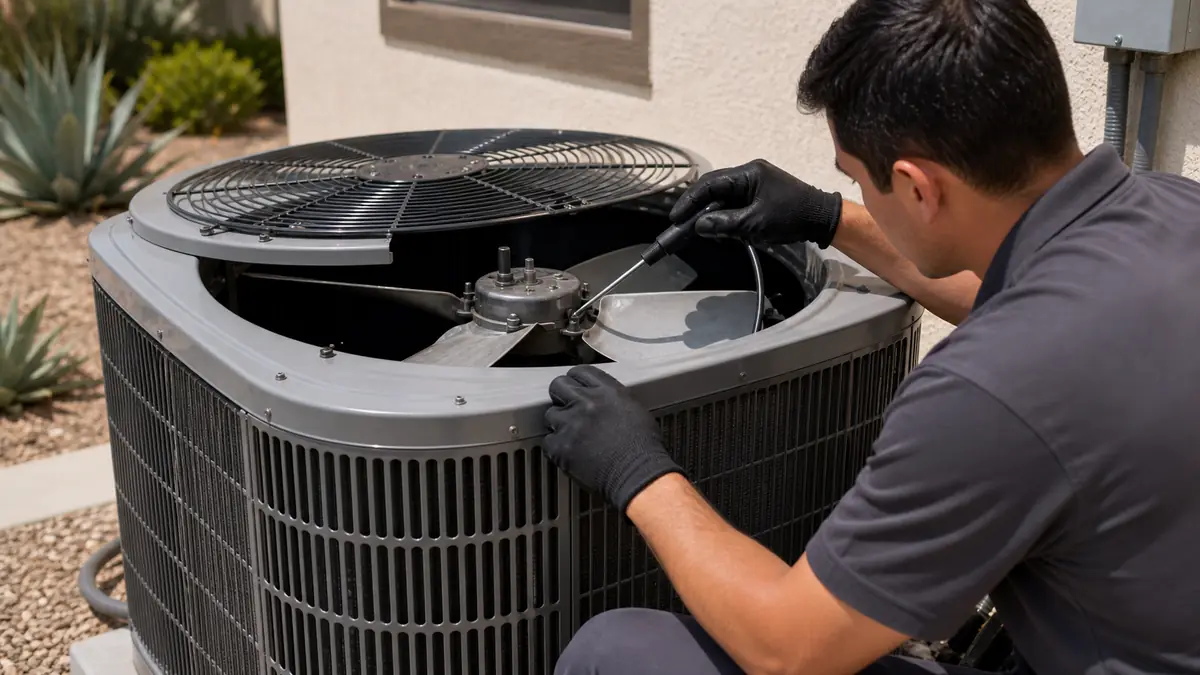
What does each Trane noise mean?
Air conditioners are honest about their noises if you know the vocabulary. The sound usually narrows the fault to one or two parts before a tech even opens the panel. Match what you are hearing to this table; the cost lanes are dated typical 2026 SoCal ranges, confirmed after diagnosis.
| Noise | Likely cause / first check | Typical 2026 cost lane |
|---|---|---|
| Loud hum, fan not spinning | Failed run capacitor - top SoCal failure | $150 - $450 |
| Metallic screech or squeal | Fan motor bearing or blower component failing | $300 - $900 |
| Buzzing at the disconnect/contactor | Pitted contactor chattering or loose 24V | $150 - $450 |
| Rattle or clatter from condenser | Loose fan blade, debris, or worn mount | $109 - $600 |
| Hissing near the line set or coil | Refrigerant leak at a Spine Fin or fitting | $225 - $1,500 |
| Bang on startup, then runs | Contactor inrush or duct oil-canning | Diag first; $109+ |
Why does the hum-and-stall failure spike here?
Heat kills capacitors, and Woodland Hills has the heat. As the hottest neighborhood in the city, it runs condensers near full duty cycle for months, and a capacitor weakened by that heat-soak finally drops out on a 100 F afternoon - so it buzzes but will not start. That is why this single sound accounts for so many of our summer no-cool calls across Walnut Acres and Vista de Oro. The fix is fast because we stock the part.
Which noises should make me shut the system off?
A loud hum with no fan, a metal-on-metal screech, a grinding noise, or an electrical buzzing or burning smell - power those down. Running a stalled or seizing unit can burn out the compressor or motor and turn a cheap part into an expensive one. A soft hum on a variable-speed XV20i is normal. When in doubt, switch it off and call; that is the safe move on a hillside lot where the condenser is hard to see.
How does a tech track a Trane noise to the part?
We work the sound in a fixed order so the cheap suspects get ruled out first. With the disconnect pulled, we meter the dual-run capacitor against its rated microfarads - a fan-side capacitor reading 3 uF on a 5 uF rating explains the hum-and-stall on the spot. Next we inspect the contactor points for pitting and arcing that cause the buzzing chatter, then we spin the condenser fan by hand to feel for the gritty, notchy bearing behind a screech. If the electricals check out, we look at the Spine Fin coil and line-set fittings for the oil film that marks a refrigerant hiss, and on a communicating XV20i or XL18i we read the XL850 or XL824 for any logged alert. Each step takes minutes and tells us whether you are facing a $150 to $450 capacitor or a deeper coil or motor job.
What can I safely check before calling?
Power the unit off first, then look for the obvious: leaves, a stick, or debris fouling the condenser fan can cause a rattle or clatter you can clear yourself once the disconnect is pulled. A loose service-panel screw vibrating against the cabinet is another harmless rattle. Anything past that - a hum with a dead fan, a metallic screech, a grinding noise, or an electrical buzz - is a metering job, not a homeowner fix, because the parts behind those sounds carry stored charge or live 240V. When in doubt, leave it off and let us read it.
Common questions
Why does my Trane condenser buzz but the fan will not spin?
That hum with a stalled fan is the classic failed-capacitor signature, and it is the single most common no-cool call in Woodland Hills. The capacitor no longer gives the fan and compressor the torque to start, so the unit just buzzes. Turn it off so it does not overheat and call us - it is usually a same-visit, $150 to $450 fix.
Is a screeching Trane AC dangerous?
A metal-on-metal screech often means a failing fan motor bearing or a slipping blower component, and running it that way can seize the motor and overheat the compressor. It is not an explosion risk, but it will turn a motor repair into a bigger bill if you keep running it. Shut it down and have it looked at before the next hot day.
What is the loud bang when my AC starts up?
A single bang at startup is often the contactor slamming in or ductwork oil-canning as pressure changes. A repeated banging or clattering from the condenser can be a loose fan blade or debris. In a hillside yard, it can even be a fan striking leaves or a stick that blew in. We pinpoint it rather than guess.
My XV20i hums quietly - is that a problem?
Probably not. A variable-speed XV20i is supposed to run quietly and almost continuously on low stage, so a soft hum is normal operation, not a fault. A new rattle, grinding, or electrical buzzing is what to watch for. If the sound changed recently or the XL850 shows an alert, that is worth a look.
Related: AC repair, Trane fault codes, water leaking, and maintenance plans.